.png?width=824&height=454&name=EARTHDAY2026%20(1).png)
Every Earth Day, the focus usually lands on recycling, transportation, and reducing physical waste. But there’s another layer quietly shaping our environmental impact every day: technology.
From the devices we use to the systems businesses rely on, energy consumption is deeply tied to how we interact with digital tools.
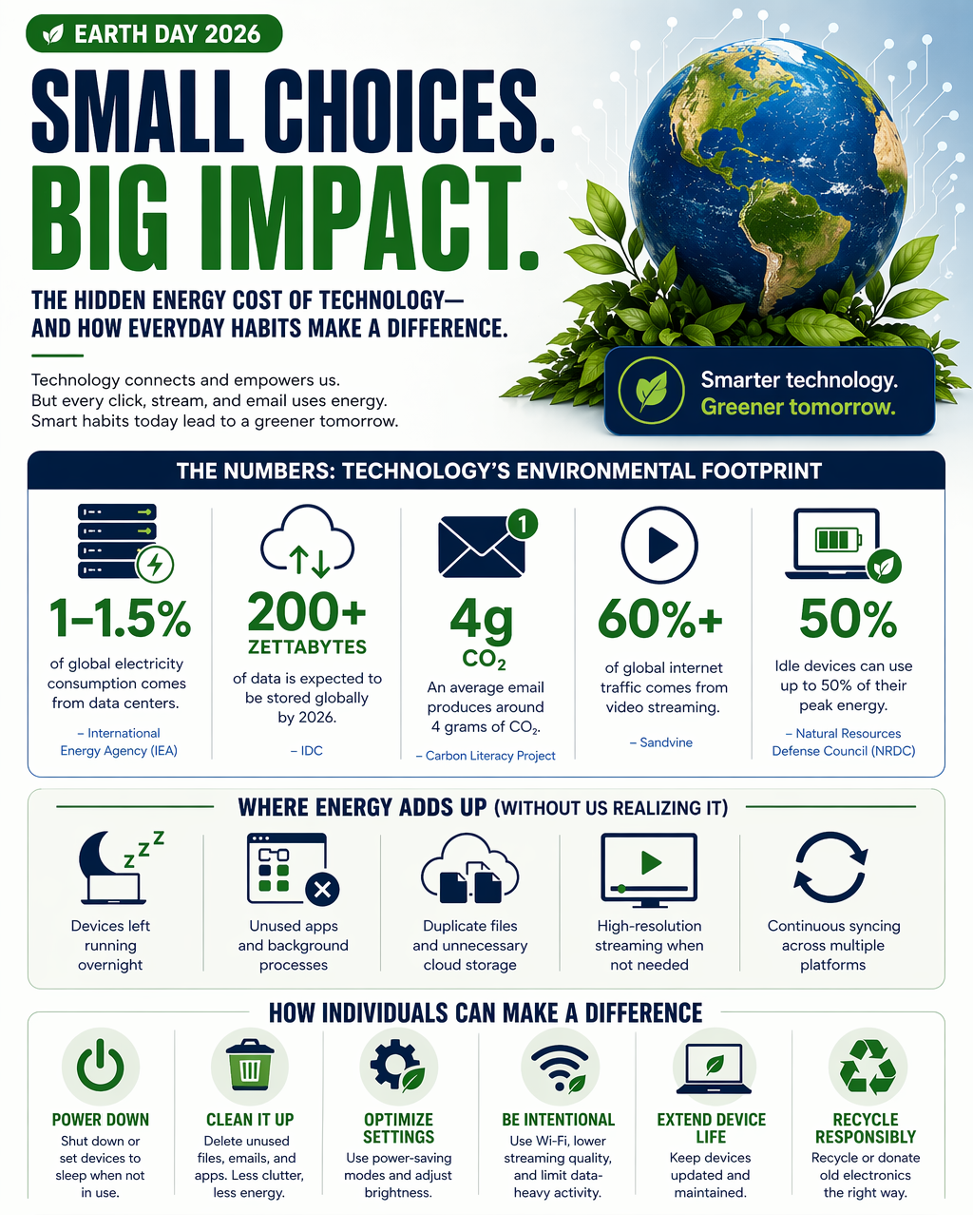
The Growing Energy Demand Behind Technology
Technology powers nearly every industry today, but it also comes with a measurable environmental cost.
- 🌐 Data centers account for about 1–1.5% of global electricity consumption, and that number continues to grow as cloud usage expands.
- 📧 An average email generates around 4g of CO₂, and attachments or large files can significantly increase that footprint.
- ☁️ Cloud computing is expected to store over 200 zettabytes of data globally by 2026, increasing the demand for energy-intensive infrastructure.
- 💻 Idle devices can consume up to 50% of their peak energy usage, even when not actively in use.
- 📺 Streaming video accounts for more than 60% of global internet traffic, contributing heavily to data transfer energy consumption.
While these numbers may seem abstract, they reflect something very real. Every file stored, every system running, and every device left on contributes to a larger energy demand happening behind the scenes.
The challenge is not just at the enterprise level. It is shared across businesses, teams, and individuals who rely on technology every day.
Where Energy Adds Up in Everyday Use
For most people, energy consumption is not something they see directly. It’s built into routine actions:
- Devices left running overnight
- Unused apps consuming background resources
- Duplicate files and unnecessary cloud storage
- High-resolution streaming when it is not needed
- Continuous syncing across multiple platforms
These habits often go unnoticed, but they quietly contribute to the larger energy footprint of technology.
Small Changes That Create Real Impact
Improving efficiency does not require major disruption. It starts with awareness and a few practical adjustments:
- Power down or set devices to sleep when not in use
- Clean up storage and reduce digital clutter
- Limit background applications and processes
- Use energy-saving settings across devices
- Be intentional about how technology is used daily
These changes not only reduce energy consumption but also improve performance and extend the lifespan of devices.
A Smarter Approach to Sustainability
Sustainability is not just about doing less. It’s about doing things smarter.
Across industries, from healthcare systems that require constant uptime to manufacturing environments driven by automation, technology is essential. But efficiency in how those systems are managed directly impacts energy use.
At Ferrum, we see this firsthand. When systems are optimized, resources are aligned, and unnecessary load is reduced, businesses not only improve performance but also lower their environmental impact.
Where YOU Fit In
While industries continue to move toward more sustainable operations, individuals still play a critical role.
Every device you use. Every workflow you follow. Every small decision adds up to something bigger.
This Earth Day, it’s not about being perfect. It’s about making progress.
Start small. Stay consistent. And remember, even the simplest tech habits can create real impact over time.
Better systems. Smarter habits. A greener future, built one decision at a time.